


Count the hand before choosing an action
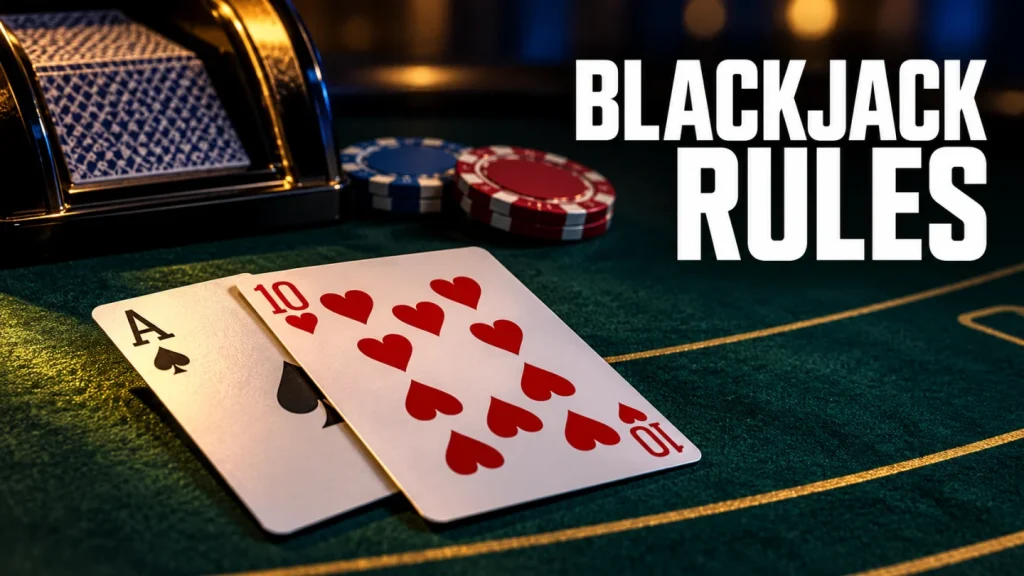
Number cards normally count at face value, picture cards as ten and an ace as one or eleven as permitted by the hand. A soft hand uses an ace as eleven without exceeding 21. A natural blackjack usually means an ace plus a ten-value card in the initial two-card hand; its treatment depends on the table rules.
Know what the action labels mean
Hit requests another card; stand ends the player's drawing decision. Double and split have table-specific eligibility conditions and may require another stake. Surrender, where offered, has its own timing and settlement rule. This is a vocabulary guide, not an assertion that every table offers every action.
Compare the rules that change the result
Record the payout for a natural, the dealer's soft-17 rule, the number of decks, splitting restrictions and doubling conditions. Side bets need a separate paytable. A familiar blackjack title does not make two tables equivalent if one of those rules changes.
A payout illustration
For an eligible winning natural with a 10-unit stake, a hypothetical 3:2 profit payout produces 15 units of profit; a 6:5 profit payout produces 12. We checked the arithmetic to show why the payout rule matters. It is not an estimate of a player's long-run result, and pushes or other exceptional outcomes are outside this simple illustration.
Keep decisions and guarantees separate
Knowing rules does not guarantee a profitable session. Live blackjack presentation adds timing and connection questions, while statistical explanations concern different questions from the next hand. Check the actual table help screen and stop the comparison if the relevant rule cannot be established.